Civic Readiness conference reinforces importance of U.S. democracy
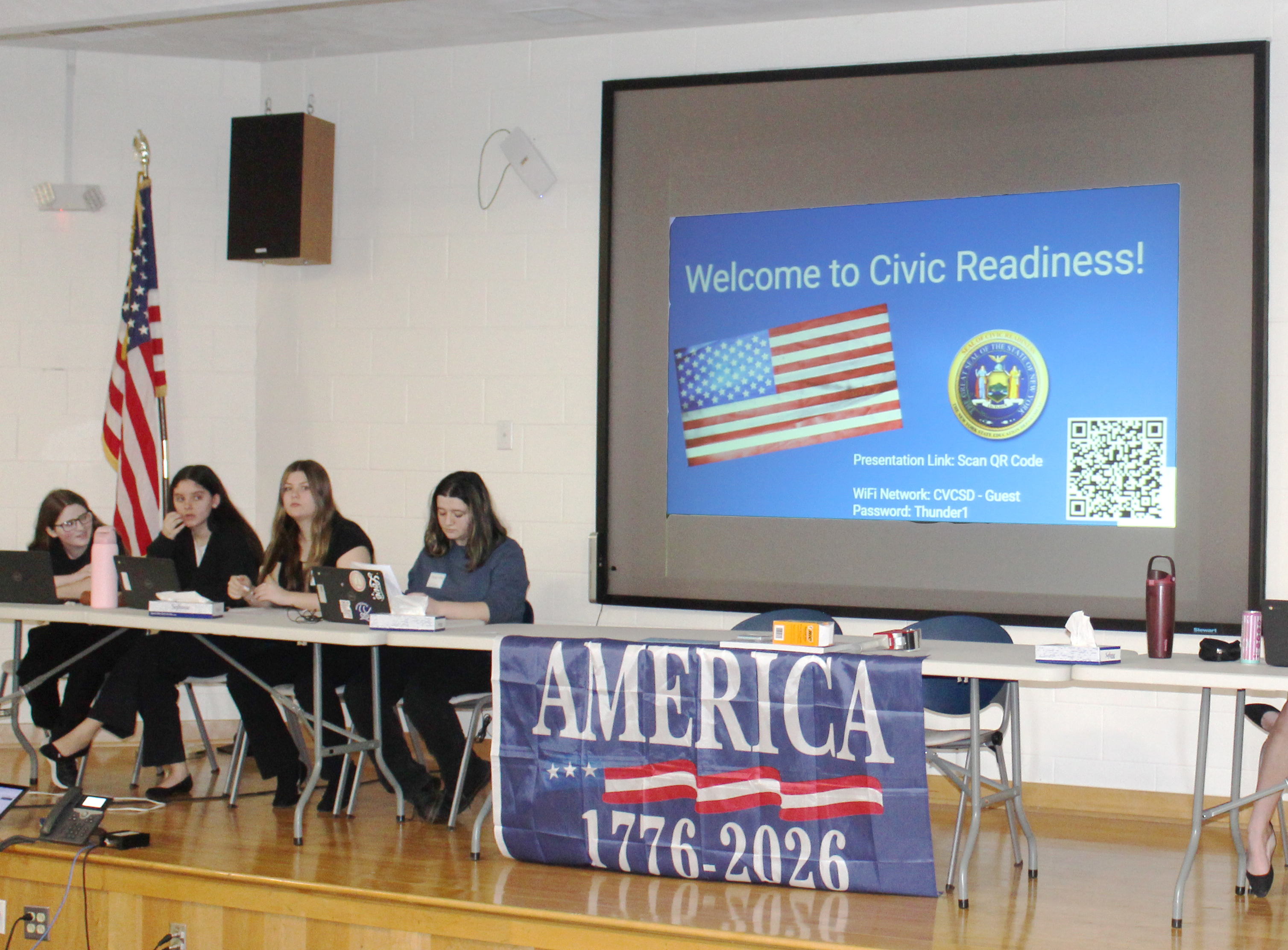 CVA students prepare for the Civic Readiness conference
Central Valley Academy hosted students and faculty from Little Falls, West Canada and Mt. Markham for a Civic Readiness conference in March, highlighting on the need to protect and preserve democracy. The conference is an extension of CVA's ongoing commitment to graduate students who are ready and able to serve as engaged citizens in American society.
Conference organizer and CVA US History teacher Christine Ruff opened the day, briefly discussing the legacy of democracy in the United States. She included a quote from President Franklin D. Roosevelt, "Democracy cannot succeed unless those who express their choice are prepared to choose wisely. The real safeguard of democracy, therefore, is education."
Students from CVA and Little Falls presented on tariffs, the Emoluments Clause, executive actions, the domestic deployment of National Guard troops, freedom of speech, and right to assemble. Presentations did not represent specific political views, but instead focused on the origin and historical and current interpretation of each.
Following student presentations Judge Anthony Brindisi joined the conference via Zoom. He shared his experiences as a justice, a NY Assemblyman, and a US Representative. He stressed the importance of being active in community and engaging in the democratic process.
Chanda King and Christina VanValkenburgh, Republican candidates for the 118th NY Assembly seat, held a brief Town Hall meeting. Each spoke of why they entered the race and what they wanted to accomplish, if elected.
Seal of Civic Readiness
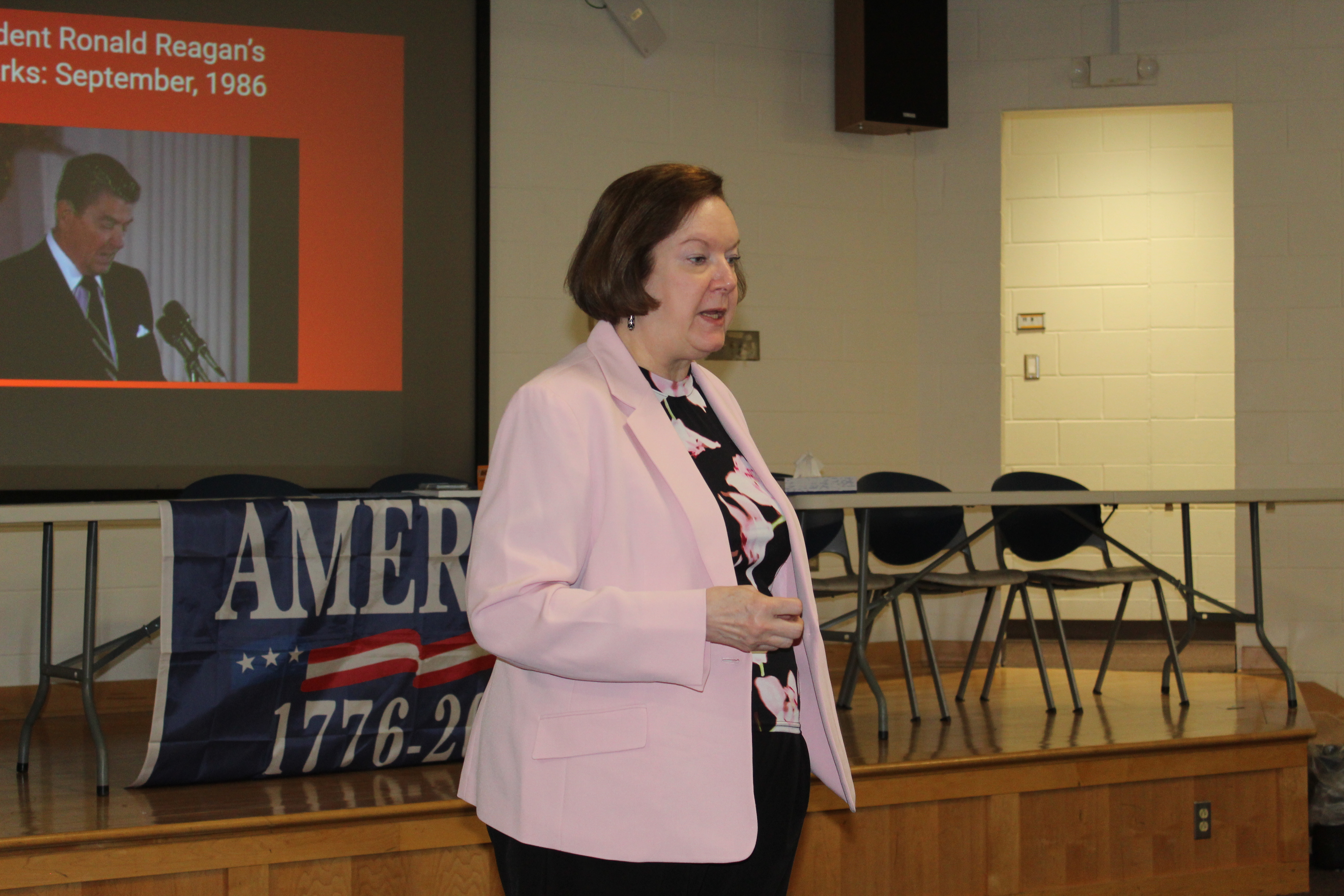 CVA US History teacher opens the conference
CVA hosted it's first Civic Readiness conference in 2024 to introduce the newly announced NY Seal of Civic Readiness. Mrs. Ruff spearheaded the conference to promote the Seal and to provide students from area schools with the chance to share their knowledge of US government and political issues.
"The Conference is just one example of Mrs. Ruff's continued commitment to raise students' civic understanding," said Central Valley Superintendent Jeremy Rich.p"Her efforts are critical to Central Valley's goal to be a part in raising up the next generation of engaged citizens."
What is the Seal of Civic Readiness?
Civic readiness is the ability to make a positive difference in the public life of our communities through the combination of civic knowledge, skills and actions, mindsets, and experiences. The Seal is a formal recognition that a student has demonstrated the civic knowledge, skills, mindsets, and experiences necessary to become an actively engaged citizen. Students can choose Civics as a 4+1 graduation pathway (passing a math, ELA, science, and social studies Regents and completing the requirements for a Civics pathway) or as a Regents diploma with Advanced Designation (passing seven Regents exams and completing the requirements for a Civics pathway). Students who choose to graduate through a different pathway (such as Arts, CTE, or World Languages) can earn a Seal of Civic Readiness on their high school transcript and diploma.
What does a Seal of Civic Readiness represent?
The Seal:
- Shows the student’s understanding of and commitment to participatory government, civic responsibility, and civic values;
- Provides universities and colleges with a method to recognize and provide credit for attainment of higher level of understanding and skills in Social Studies;
- Demonstrates to universities, colleges, and future employers that students have earned recognition for their civic knowledge, skills, mindset, and experiences; and
- Recognizes the value of civic engagement and scholarship to school communities and society at large.
Students will earn points in two areas—Civic Knowledge and Civic Participation. They can begin earning points as early as middle school. Students will choose from specific courses, exams, and activities as outlined in the Education Department's Civic Readiness Manual. Examples of the options include:
- Civic Knowledge
- Earn course credit in Global History & Geography I, Global History & Geography II, United States History & Government, and Participation in Government & Economics (or the local equivalent),
- Pass or master the Global History & Geography II Regents and/or United States History Regents,
- Earn course credit in an advanced social studies class,
- Complete a social studies research project.
- Civic Participation
- Complete a high school civic project,
- Complete 25 hours of community service and write a reflective essay,
- Earn credit in an elective civic course and submit a knowledge essay or presentation,
- Complete 40 hours of community service and submit a knowledge essay or presentation,
- Complete a middle school capstone project,
- Complete a high school capstone project.